

Best Business Card Paper Types: A 2026 Guide

Table of Contents
How Paper Weight and Thickness Shape Perceived Value
Pt vs. Lb: Decoding Paper Weight Labels
Standard Business Card Paper Weight Explained
Matte vs. Glossy Business Cards: Which Finish Fits Your Brand?
Premium Business Card Finishes That Make an Impression
Matching Paper Types to Your Industry and Brand Identity
Durability, Wear Resistance, and Cost-to-Durability Ratio
Recycled and Specialty Materials: Sustainability Meets Tactile Appeal
Conclusion
Frequently Asked Questions
Last Updated: September 14, 2026
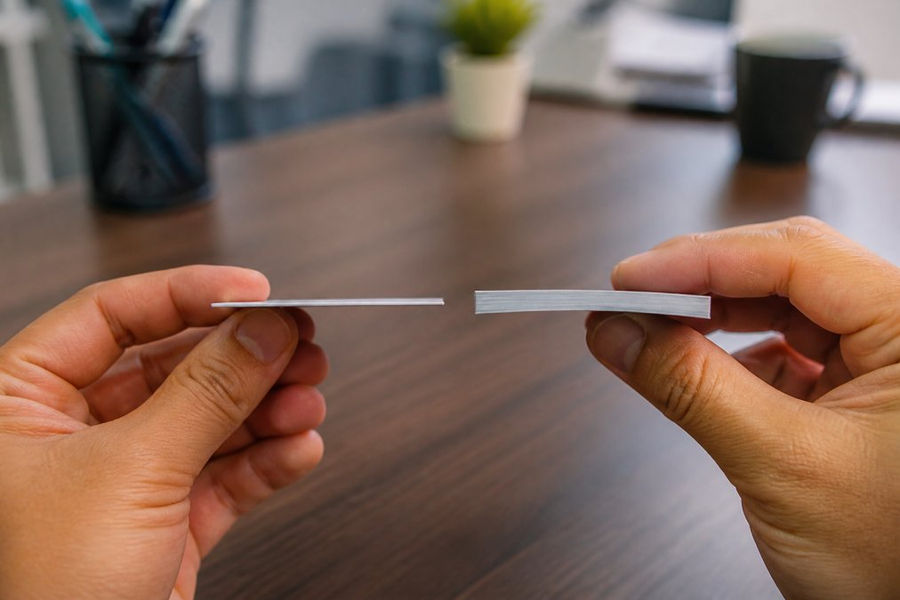
How Paper Weight and Thickness Shape Perceived Value
The best business card paper types balance weight, finish, and cost against how you want your brand to feel in someone's hand. Most people make this decision backwards: they pick a color and a logo, then grab whatever cardstock is cheapest. The paper itself is the first physical impression your brand makes, and it happens before anyone reads a single word on the card.
At Full Color Business Cards and Flyers in 1 Day, we print cards for startups, sales reps, and event coordinators every week, and the question we hear most is some version of "how thick should this be?" Here's the honest answer: thickness signals value, and value is what makes someone keep your card instead of tossing it in a drawer.
Pt vs. Lb: Decoding Paper Weight Labels
Point (pt) measures thickness in thousandths of an inch, while pound (lb) measures weight per ream of paper. A 14pt card is 0.014 inches thick. A 100lb cardstock is heavier per sheet, but that number says nothing about how thick it actually feels.
This is where most buyers get tripped up. Two cards can both say "100lb" and feel completely different depending on the mill and coating. Points are the more reliable number for business cards because they describe the physical dimension you actually touch.
Standard Business Card Paper Weight Explained
Standard business card paper weight lands between 12pt and 16pt for most commercial printing. The 12pt to 14pt range is the workhorse: sturdy enough to hold its shape, flexible enough to fit in a wallet without cracking. Anything under 12pt starts to feel like a flyer. Anything above 16pt enters premium territory and often needs special handling.
If you're ordering for a first round of networking cards, 14pt is the safest default. It reads as professional without pushing your budget into specialty stock.
Matte vs. Glossy Business Cards: Which Finish Fits Your Brand?
Matte vs glossy business cards comes down to one trade-off: matte absorbs light and resists fingerprints, while glossy reflects light and makes colors pop. Neither is "better." They solve different problems.
Matte-finish cards suit brands that want to feel understated and premium. The uncoated-paper surface takes ink differently, producing softer tones with lower color-vibrance. Glossy-coating pushes contrast and saturation, which is why it's common in retail and food service where photos carry the card.
Matte: best for consultants, law firms, and design studios; hides smudges; works with foil-stamping
Glossy: best for restaurants, salons, and product brands; maximizes color-vibrance; can show fingerprints
Uncoated: best for a natural, tactile-experience feel; takes pen and pencil well for notes
One thing most guides miss: glossy cards are harder to write on. If you plan to jot a note before handing a card over, matte or uncoated wins every time.
Premium Business Card Finishes That Make an Impression
Premium business card finishes change how a card feels before anyone reads it, but the finish is only half the equation. The paper underneath determines whether that finish looks intentional or looks like a mistake. Most guides describe finishes in isolation; the real decision is the paper-and-finish pairing.
Here is how the four most common premium finishes actually behave on different stocks.
Soft-touch lamination is a matte film laminated to both sides of the card. It works on coated cover stock in the 14pt to 18pt range because the film needs a smooth surface to bond evenly. On heavily textured or cotton-blend paper, the film can lift at the edges over time. The velvety surface people instinctively rub between their fingers is a physical coating, not a paper trait, which is why a soft-touch 14pt card often feels more premium than a bare 16pt card.
Spot UV is a raised, glossy layer applied over specific elements, usually a logo or a single design line, while the rest of the card stays matte. It needs a coated or laminated base to sit on; on uncoated stock the UV coating soaks in and the raised effect flattens. The contrast between the matte field and the glossy raised element is what creates the tactile pull, so a single spot-UV logo on a matte card usually reads as more deliberate than covering the whole card in foil.
Foil stamping presses metallic film into the paper under heat and pressure. It works best on smooth, coated stocks and on uncoated stocks with a tight fiber, foil on a loose, fibrous recycled sheet can look broken or patchy because the film cannot seat evenly. Foil also has a minimum line weight; very thin type or hairline details can fill in or tear. If your logo has fine serifs, ask for a proof on the exact stock before committing.
Embossing and debossing raise or recess a design element by pressing the paper between a male and female die. This is the one finish that gets better on heavier stock: a 16pt or 18pt sheet holds a crisp raised edge, while a 12pt sheet can crack along the emboss line. Cotton-blend and uncoated stocks emboss especially well because the fibers compress rather than fracture.
A few practical pairings that hold up in production:
Matte laminated 16pt cover stock + spot UV logo, the most reliable premium combination
Uncoated 14pt to 16pt + foil stamp, classic, but proof the foil on the exact sheet
Cotton-blend 16pt + blind emboss (no ink, no foil), subtle and expensive-looking
Soft-touch 18pt + foil, heavy and dramatic, best for a single accent
These finishing options cost more per unit, so use them selectively. The tactile experience matters more than the number of effects stacked on one design, and a finish that fights its paper reads as cheaper than no finish at all.
Pro Tip Ask for a physical proof before committing to a premium finish. Foil and embossing interact with paper grain in ways a screen preview cannot show, and a finish that looks subtle in a mockup can dominate the card in person.
Watch Out Not every finish works on every stock. Textured and cotton papers may not accept standard glossy coating evenly, and some recycled stocks have lower opacity that lets show-through happen on double-sided printing. Confirm paper-and-finish compatibility before ordering a large run.
Matching Paper Types to Your Industry and Brand Identity
Industry norms set expectations, but the smartest move is to match paper to the feeling you want, not just the category you're in. A fintech startup and a law firm both want trust, yet they signal it differently.
Industry | Recommended Paper | Finish | Why It Works |
Creative agencies | 16pt cover-stock | Soft-touch matte | Signals design confidence |
Law and finance | 14pt to 16pt | Matte or uncoated | Reads as established and serious |
Restaurants and retail | 14pt | Glossy | Maximizes color-vibrancy |
Tech startups | 14pt to 16pt | Matte with spot-uv | Modern without feeling flashy |
Event and trade show | 16pt or heavier | Matte, double-sided-printing | Survives handling all day |
Heavyweight cards cost more, so not every business needs 16pt. A startup handing out 200 cards at a first event can get excellent results from a well-finished 14pt card and put the savings toward a second print run.
Durability, Wear Resistance, and Cost-to-Durability Ratio
Durability and wear resistance depend on three things: paper thickness, coating, and how the card is stored. A 16pt card with soft-touch lamination will outlast a 12pt uncoated card by a wide margin, especially if it lives in a pocket or a wallet (An overview of paper and paper based food packaging materials). But the more useful question is not which card lasts longer, it is how much each surviving card costs you.
The cost-to-durability ratio is the calculation most buyers skip. A cheaper card that scuffs, bends, or fades after a month of pocket time forces a reprint, and the second order erases the savings from the first. Heavier stock with a protective coating usually costs more upfront and less over a year.
Here is how the math actually works. Say you order 500 cards. If a standard 14pt uncoated card costs roughly one unit price and a 16pt soft-touch laminated card costs noticeably more per card, the premium option looks expensive on the invoice. But if the standard card is handed out and discarded, bent corners, ink rubbed off the logo, a crease down the middle, the recipient never keeps it, and you are effectively paying for cards that do not work. The premium card that survives a full quarter of networking costs less per month than cards you replace every few weeks.
A common pattern across industries:
High-volume, low-stakes handouts (trade show swag, event giveaways): a well-finished 14pt card is the right call. You are optimizing for cost per card, not cost per surviving card.
Relationship-driven sales (financial advisors, real estate, B2B sales): a 16pt card with a protective coating pays for itself because the card often stays in a wallet or a desk drawer for months.
Creative and design-led brands: the card is a portfolio piece. Premium stock and a finish that survives handling is part of the deliverable, not an upsell.
Corporate and legal: matte or uncoated 14pt to 16pt reads as established and serious. Durability matters less than the impression at the handoff.
Storage matters as much as stock. Cards kept loose in a pocket or a bag take far more abuse than cards in a wallet slot or a card case. If your team hands out cards from a jacket pocket all day, the coating is doing more work than the thickness.
Key Takeaway Buy for the lifespan you need, not the lowest unit price. Calculate cost per surviving card, not cost per card, and the premium option often wins for anyone who networks regularly.
Recycled and Specialty Materials: Sustainability Meets Tactile Appeal
Recycled-materials and specialty stocks now perform as well as virgin paper for most business card uses. Recycled cardstock comes in uncoated and coated versions, and modern recycled stock holds ink cleanly enough for sharp text and detailed logos (the EPA).
Specialty options extend past recycling. Cotton-blend papers give a soft, letterpress-friendly surface. Colored core stock shows a contrasting edge when cut, which adds a visible design element without extra printing. Textured papers add paper-grain that makes a card feel handmade rather than machine-produced.
Sustainability is a real selling point for brands whose customers care about it, but the tactile-experience has to hold up too. A recycled card that feels flimsy undercuts the message. Look for recycled cover-stock in the 14pt to 16pt range so the environmental story and the physical quality reinforce each other.
Watch Out Not every specialty stock works with every printing method. Textured and cotton papers may not accept standard glossy-coating evenly, and some recycled stocks have lower opacity that lets show-through happen on double-sided-printing. Confirm compatibility before ordering a large run.
Conclusion
Choosing paper is a branding decision disguised as a printing decision, and the wrong stock quietly undercuts everything else you've built. Start with a 14pt card, pick a finish that matches how you want to be perceived, and only move to premium finishing-options once you know they'll be seen.
Full Color Business Cards and Flyers in 1 Day handles same-day and next-day printing for business cards, flyers, banners, and custom apparel, with semi-custom design support if you don't have a finished file. We offer budget-friendly pricing for startups, flexible packages you can substitute and divide, and responsive customer service with a 30-minute email response time. Submit your order online and get a card that matches the brand you're building.
Frequently Asked Questions
What is the best paper to print business cards on?
The best business card paper depends on your brand and use case. A 16 pt cardstock with a matte or soft-touch finish works well for most professionals because it balances durability with a refined feel. If you need cards fast, choose a standard weight that your printer stocks locally to avoid delays.
Is glossy or matte better for business cards?
Glossy business cards make colors pop and resist smudging, which suits photography-heavy or vibrant designs. Matte business cards reduce glare and are easier to write on, making them practical for networking events where you jot notes. The right choice depends on your design and how you use the cards. Many brands order both to cover different situations.
What thickness paper is best for business cards?
Most professional business cards fall between 14 pt and 16 pt. A 16 pt card feels substantial without being bulky, and it fits standard wallets and cardholders. If you plan to add foil stamping or embossing, a thicker stock holds those finishes better and resists warping over time.
How does paper thickness affect the perceived value of a business card?
Thicker cards signal investment and attention to detail. When someone receives a flimsy card, they may subconsciously associate it with a lower-quality operation. A rigid, heavyweight card creates a tactile experience that feels deliberate and professional. This matters most in industries where first impressions drive decisions, such as consulting, real estate, and luxury services.
Can you print high-quality business cards on recycled paper stocks?
Yes. Modern recycled cardstocks come in weights and finishes that rival virgin paper. They work well with digital and offset printing, and many support foil stamping and embossing. Recycled stocks often have a slightly warmer tone and visible fiber texture, which can reinforce an eco-conscious brand identity. Ask your printer for samples to confirm ink absorption and color accuracy before committing to a full run.
What are the most durable materials for premium business cards?
Beyond heavyweight cardstock, durable options include laminated stocks. Laminated cardstock adds a protective layer that extends the card's life without going fully synthetic. Each material has trade-offs in cost, print compatibility, and feel, so match it to how you distribute your cards.
Most businesses lose their best first impression to a card that feels disposable. Full Color Business Cards and Flyers in 1 Day prints on premium stock with rich, sharp results and same-day or next-day turnaround, backed by semi-custom design help and flexible packages built for growing teams. Get started with Full Color Business Cards and Flyers in 1 Day and hand out a card people actually keep.
Submit Order Online


Comments